
Carry less chaos to the water.
Decide how much, how far and how difficult the route is before choosing transport.
Four ways to move gear
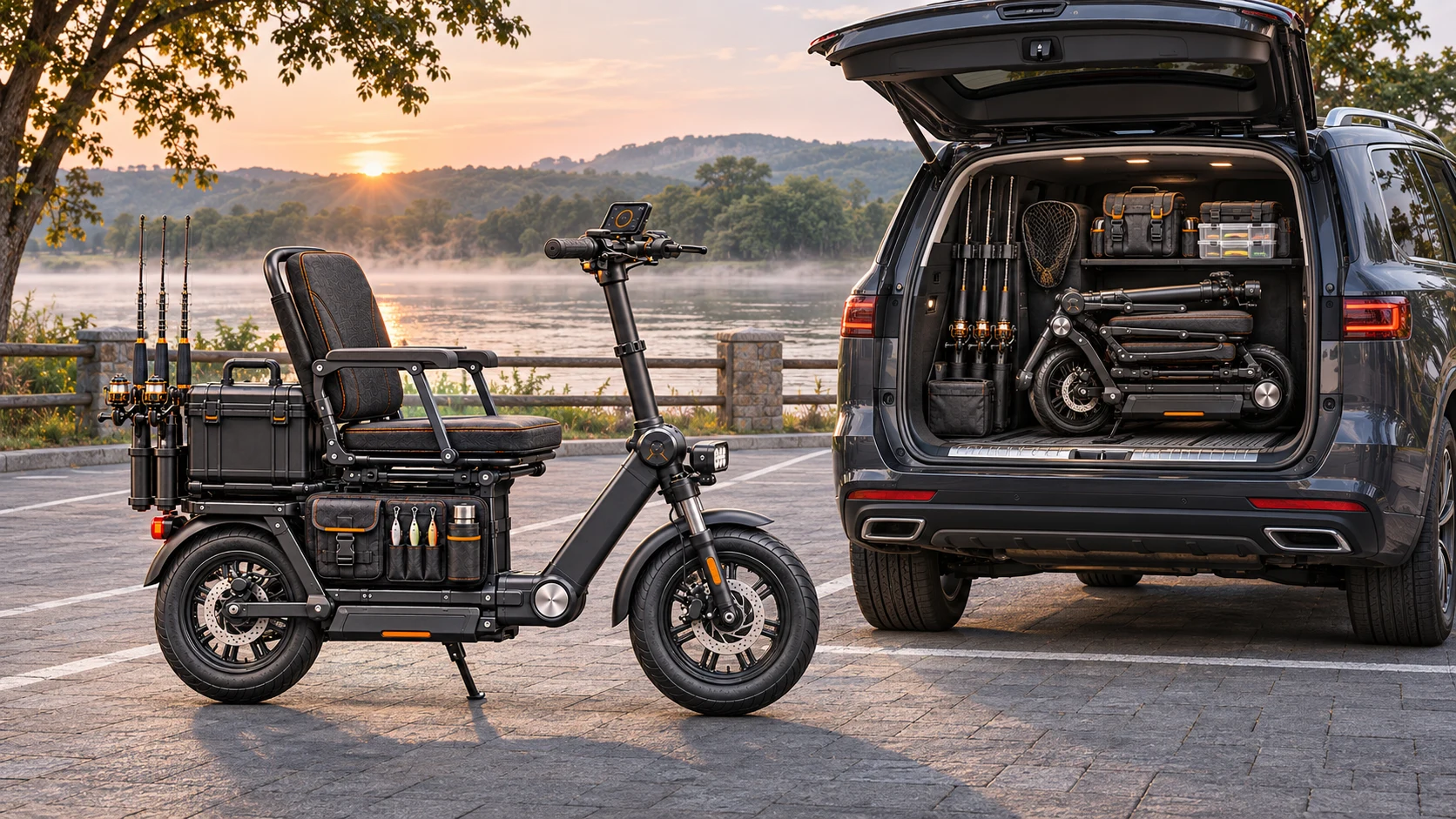
Backpacks are flexible for light loads and difficult ground. A tackle box provides seating but still needs carrying. A cart moves equipment but needs a separate setup at the bank. An electric folding fishing vehicle combines movement, seating and storage, with its own weight and charging needs.
Measure the boot first
Folded dimensions are 950 × 520 × 740 mm for Standard, 950 × 520 × 760 mm for Flagship and 1020 × 580 × 780 mm for Navigator. Approximate weights are 29, 34 and 39 kg. Consider both space and safe lifting.
Count the whole load
Standard and Flagship carry 120 kg; Navigator carries 130 kg. Include the rider and every piece of gear. Choose nominal range with room for the round trip.
Seating, storage and interfaces
Integrated seating removes a separate chair. Navigator has 42 L of rear and side storage. Keep wet nets away from dry bait and electronics. Check accessory compatibility instead of improvising an unstable mount.
Pack in a useful order
Keep heavy objects low, secure long rods, seal bait and protect electronics from moisture. Pack wet gear separately, secure rods and accessories, then fold the vehicle. Dry nets at home.
Before departure
Check charge for the return, folding locks, seating and mounts, wheels and brakes, essential tackle, weather and local restrictions. After rain, dry the body and inspect connectors before charging.